




Everyone should know how great THE SENDER is by now and yet somehow they don't. All these years later and I still rarely see it mentioned. Obviously it's my duty to sing its praises yet again and so here we go…

1: The Tone
THE SENDER is one somber piece of work and it's magnificently consistent. The colors are uniformly grey, bland or beige and its subdued rainy day mood refreshingly goes against the grain of most early eighties fare. There's little if any levity and I think the only time we see the sun shining is during a suicide attempt. It's like A NIGHTMARE ON ELM STREET through the eyes of Ingmar Bergman. It's probably not for everybody and its glum nature may explain its limited appeal but I LOVE it. It's not too surprising that director Roger Christian was the art director for ALIEN and cinematographer Roger Pratt would go on to gift his talents to BRAZIL and 12 MONKEYS.

2:The Central Relationship/Actors
Intense Zeljko Ivanek portrays the wounded and confused "John Doe #83" who is sent to a mental clinic after trying to take his own life. The insanely underrated Kathryn Harrold is Gail Farmer, his concerned and intuitive therapist who takes him under her wing. The two are great together and it's easy to root for their positive, nurturing relationship as it threatened by shock therapy enthusiast Dr. Denman (effortlessly unlikable Paul Freeman) and John's unnerving and overtly religious mother (a quietly spooky Shirley Knight).

3: The Shock Therapy Scene
As it turns out John Doe#83 has quite a special talent and can "send" horrific nightmarish images and hallucinations into the minds of those around him- in some cases, triggering their deepest fears. It also turns out that when dealing with somebody with such ability that shock therapy is definitely not the way to go if you're trying to quell the issue. We're talking doctors and nurses flying about in slow motion through glass windows and fellow patients literally losing their heads. This scene is so beautifully done and continues to be a jaw-dropping sight no matter how many times I revisit the movie.

4:The Score
The great Trevor Jones (LABYRINTH, ANGEL HEART, DARK CITY) really gets behind the material and pushes everything to a higher level. Some of what he delivers is the saddest thing to ever hit your ears and then when needed, he brings on the bombast and creeping dread expertly.

5: The Visions
Rats crawling out of mouths, cockroaches swarming the fridge, decapitated heads flying about; what THE SENDER does not deliver in the body count department it certainly makes up for in the horrifying visual imagery arena. The line between reality and nightmare is cleverly blurred (and it should be noted, years before such a scenario was presented in the NOES series) and there's a grounded, realistic quality to the happenings that make them that much more disturbing.

THE SENDER was way ahead of its time and it may still be. I guess it'll never be an outright crowd-pleaser but it beats its own idiosyncratic drum in a way that has always impressed me. It's a mature, thoughtful fright flick that stands on its own two feet and caters to no one and I'll always be proud to champion it.


On my last visit to the hallowed halls of Kindertrauma, I caused somewhat of a stir with my admission that Curtains—and not the more widely-regarded and revered Halloween or Friday the 13th or any number of other better crafted films from the subgenre's golden age—was my favorite slasher film. It was quite the scandal—pearls were clutched, jaws were left on the floor, and villagers of all ages fled the scene en masse, arms waving and voices shrieking in unison like Bodega Bay's schoolchildren in The Birds. Well, get ready for yet another brouhaha on par with the horror of an acapella chorus of "Risseldy Rosseldy" on a looping reel because I'm about to do it again.
Halloween isn't my favorite John Carpenter film.

I know, I know. But all the holy water and melodramatic exorcism rituals from every bad demonic possession movie combined can't evict this demon of truth from my soul. Don't get me wrong; I adore Carpenter's Halloween—for both its merits as a classic horror film and its far-reaching genre influence. Plus, it gave me—er, I mean it gave the world—its preeminent scream queen, Jamie Lee Curtis. But as much as I love and appreciate the personification of evil in a mechanic's jumpsuit and Shatner mask slashing his way through leaf-strewn suburbia on its titular holiday, it's Carpenter's next film that captured my horror heart and remains—to this day—not only the one film this scary movie enthusiast watches religiously every Halloween but also my favorite horror film of all-time. Quelle surprise!
By now, you know the drill: Five of my favorite things about The Fog that contribute to its lofty ranking in my personal pantheon of great horror movies:

1. Mr. Machen's Fireside Ghost Story: The opening of The Fog is a masterclass in storytelling. From the random scenes of supernatural goings-on across the seaside town of Antonio Bay as the opening credits drift lazily in and out to the gathering of some of the town's youth around old Mr. Machen and a roaring campfire on the beach at midnight, Carpenter sets up his tale of ghostly revenge beautifully. As the late John Houseman (as Machen) recites the 1880 events that led to the purposeful sinking of the Elizabeth Dane, a clipper ship filled with leprosy-stricken colonists looking for a place to settle, the mood and atmosphere of the film is expertly set. Houseman is cast brilliantly here, his distinct, unmistakable voice the perfect vehicle to eerily establish the film's backstory. Even his nautical couture—bordering on a caricature of the wizened sea captain—lends an added visual element of tonal consistency that serves to further foster a strong sense of mood. Adding to the spooky ambiance is Carpenter's score—arguably, his best—that imbues these early scenes with a feeling of pure, inescapable dread that seems to communicate to the moviegoer, "Sorry, folks—the only out is through." Fun fact: This scene wasn't even included in Carpenter's original shoot. It was added, later, after he and producing partner Debra Hill were dissatisfied with a rough cut of the film.

2. Sandy, the Sassy Sidekick: I know I'm not alone in lamenting the all-too-short acting career of Nancy Loomis. Whether by choice or circumstance, one wishes that her roles in a trio of Carpenter films—Assault on Precinct 13, Halloween, and The Fog—would have been as strong a career springboard for her as roles in the latter two were for Jamie Lee Curtis. As Sandy Fadel, assistant to Janet Leigh's Kathy Williams character, Loomis proved that she had a clear career path to becoming a memorable character actor. Crisp, efficient, and with a slight projection of boredom that manifested in brilliant moments of deadpan sarcasm, Sandy was the perfect assistant. Loomis plays the part to precision, keeping Sandy sassy enough without crossing the line into satirical stereotype. Her onscreen boss summed it up best: "Sandy, you're the only person I know who can make ‘Yes, Ma'am' sound like ‘screw you'."

3. The Lighthouse Setting: In The Fog, the climactic battle with the ghosts of the Elizabeth Dane takes place on two fronts—the old town church where most of the cast converge and the radio station where DJ Stevie Wayne (Adrienne Barbeau) forges her own solo battle against the risen seamen. Carpenter's brilliance in setting the radio station within the backdrop of a lighthouse cannot be underscored enough. Using the real-life Point Reyes Lighthouse to film many of Barbeau's scenes, the locale lends a genuine sense of isolation that adds to the escalating tension throughout the film. From high atop her vantage point, Stevie can see the titular menace rolling into Antonio Bay and is able to use her broadcasting ability to warn those on the ground. But when those misty tendrils slide over the rocks outside WKAB, spiraling upwards and engulfing the structure in gauzy whiteness that pulsates with the revolving lighthouse beacon, the audience knows that Stevie—physically cut off and alone—is in for the fight of her life. The lighthouse setting enables Carpenter to execute some of the film's most excruciatingly tense and frightening set pieces, aided tremendously, of course, by Barbeau's bravura performance. Ironically, the creative forces behind the ill-conceived 2005 remake of The Fog opted not to include the lighthouse locale—and that's one of many reasons why that film failed so miserably in this jaded loyalist's opinion.

4. Getting to the Church on Time: There is a sequence at the beginning of the film's third act that is easily my favorite; I call it "The Foggy Roadway Shuffle." As members of the ensemble begin to understand that something sinister is befalling Antonio Bay on its centennial anniversary, they tune into their car radios to find pre-climactic battle Stevie in full-tilt panic mode. She's tracking and broadcasting the advance of the fog into Antonio Bay, and the audience is treated to expertly executed scenes where vehicles stop short and catch the beginning wisps of fog in their headlights as characters take note of street signs before jerking steering wheels hard left or right and tearing off in another direction at Stevie's disembodied radio guidance:
"It's moving faster now, up Regent Avenue, up to the end of Smallhouse Road. It's just hitting the outskirts of town. Broad Street…Clay Street. It's moving down Tenth Street. Get inside and lock your doors. Close your windows. There's something in the fog! If you're on the south side of town, go north. Stay away from the fog. Richardsville Pike up to Beacon Hill is the only clear road. Up to the church. If you can get out of town, get to the old church."
Those scenes are fraught with tension that both escalates and palpates as Carpenter's pounding score jolts with electronic urgency.

5. Convergence of the Ensemble: While poor Stevie Wayne is left to fend for herself high above Antonio Bay on the roof of her lighthouse radio station, the rest of the ensemble converge at "the old church." It's a marvelous sequence with Janet Leigh and Nancy Loomis arriving right behind Tom Atkins and Jamie Lee Curtis, who have just rescued Stevie's young son, Andy. (We won't discuss the raw deal poor Mrs. Kobritz got.)
Leigh's Kathy Williams, fretfully: "It cut us off!"
"Where is it?" asks Atkins' Nick Castle.
"Right behind us…in the driveway."
"Quick! Inside."
Once inside, the requisite barricading of doors and windows begins, while Leigh strongarms Hal Holbrook's inebriated Father Malone (a direct descendant of one of the original conspirators who doomed the Elizabeth Dane and her passengers to their watery grave) into reading from the journal he found at the outset of the film. Before you can say, "Hey, is that Captain Blake's lost gold there in your walls?", the church is surrounded by fog and besieged by the leprosy-ridden crew of the Elizabeth Dane. Some fantastic visuals here as gnarled, waterlogged hands break through backlit stained-glass windows. Lots of hair-grabbing and screaming cast members yanked backwards toward broken windows as Father Malone finally figures out the answer to their conundrum and makes haste to set the past straight. There's a kinetic energy and choreography to these scenes that just adds crackle and momentum and ratchets up the suspense exponentially.

It is, of course, also a real treat to see Curtis and Leigh together in these penultimate scenes, the second of three onscreen appearances they'd make before Leigh's passing in 2004. (The first was an episode of The Love Boat that aired in November of 1978; the third was Halloween: H2O in 1998.)
The Fog had a production budget of about $1 million, which included Carpenter's wise choice to shoot in 2.35:1 anamorphic widescreen to give the essentially low-budget production a big-budget feel. With reshoots and added footage, final production wrapped at around the $1.1 million mark. Someone behind the scenes had a lot riding on the success of Carpenter's high-profile follow-up to Halloween. In an unprecedented move, Avco Embassy spent another $3 million (three times the film's production budget for those keeping tally) exclusively on advertising—television and radio spots, print ads, and even the placement of fog machines in the lobbies of select theaters where the film was screening. The strategy worked. The Fog was released on February 8th, 1980 to mixed reviews but robust box office, eventually taking in a $21.3 million domestic haul.
For me, The Fog represented Carpenter's vision and narrative mastery at its best. He would come close one other time in his impressive but modest career with another ensemble piece—1982's The Thing—but his time spent in Antonio Bay was a pure love letter to the old-fashioned ghost story.

Vince Liaguno is an award-winning writer, editor, and pop culture enthusiast. Visit his official author website HERE or his Slasher Speak blog HERE.

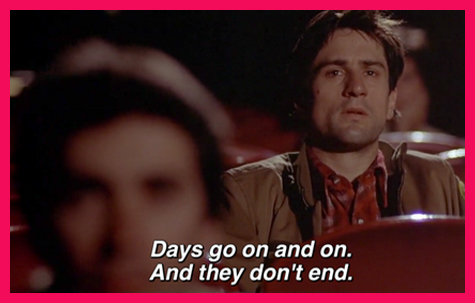
I don't know about anyone else, but I've been feeling extremely existentially depressed, hopeless and misanthropic lately-even more so than usual- as civilization collapses in real time all around us, but such is the nature of things- that's entropy for ya! That is something they tend not to show in all those futuristic "dystopian, post-Apocalyptic" films people seem to love; the spiritual and psychological damage inflicted upon those living through the collapse, it's always cyberpunk chic and Road Warrior fun and adventure. I thought I'd turn your attention to a few films which are more indicatory of the reality of the situation we face and in the tradition of the great pessimists like Oswald Spengler and Arthur Schopenhauer, dash your hopes and dreams of Thunderdome. I will skip a film like Taxi Driver, because everyone knows it and there's nothing, I can say about it that hasn't already been said, instead here are some under the radar films presaging the apocalypse.

Naked (1993) Before he lowered himself into the cesspool that is the Harry Potter film series, David Thewlis made a movie that matters. Johnny (David Thewlis) is smart and as such he is sickened by the state of affairs in the modern world, so he becomes a flawed lugubrious yet loquacious Jüngerian Anarch so as to deal with the spiritual and societal alienation and nausea an inwardly healthy person experiences in a time of general decay. This film portrays an apocalyptic world not of the Hollywoodized fun variety but one which is all too manifestly real if one has the courage to look. Naked proves one can be a devout atheist and realize hell is very real and it is all around us; which is infinitely more unsettling than a projected post mortem punishment.

Buddy Boy (1999) If David Lynch directed Rear Window, I think this would be the result. Life is not all sunshine and roses for Francis (Aidan Gillen), who intellectually lies at the opposite polarity as Johnny, but who still knows when it comes to existence, something is rotten in the state of Denmark. He has been subjected to unrelenting misfortune and brutality for no discernable reason, saddled with caring for an abusive, invalid mother (Susan Tyrrell) and now as a result of all the misery and pain he beholds, old Jehovah- once his only solace- has lost the sheen that once he had for him. He feels lost and hopeless and retreats into himself and away from the world, beginning to spy on a French neighbor, Gloria (Emmanuelle Seigner) he also seems to awaken his long dormant and hopelessly warped libido. Eventually Francis and his new crush meet and consummate a seemingly shared lust but as there are no such things as happy endings, what at first holds out hope for Francis soon proves to be his ruination and labefaction. When I first saw this film, Francis's plight hit home in more ways than one, I really can relate with existing on the margins of an uncaring, hostile society and world, not in a pretentious artist sort of way but on a visceral too close for comfort, every day to be or not to be sort of way.

Bartleby (2001) Ah work, doesn't everyone just love work? I mean we derive our raison d'être, our social standing, our sense of worth from what we do for money, don't we? Surely, we are economic beings as both our not so nearly antipodal Capitalist and Marxist overseers would have us believe, aren't we? What would we do with ourselves if we didn't have somewhere where someone was telling us what to do for reasons, we a.) don't understand and/or b.) couldn't care less about? Well I have to confess I don't love work; I don't care about work, I do not have a Protestant work ethic nor do I want one, I am not passionate about anything relating to money or what I do in order to acquire it. In short, when it comes to work, "I would prefer not to" and neither would Bartleby. Based on Herman Melville's "Bartleby, the Scrivener" Crispin Glover plays Bartleby, an odd fellow who may just have hit upon the answer to something profoundly wrong with modern people and their relationship to economic activity. I prefer this adaptation to the 1970 version as it suffuses more overt surrealism into the truly surreal, pointless nature of the work place.Â

Cop (1988) Â Oh boy, I like this one. Imagine if Dirty Harry fought really dirty; Lloyd Hopkins (James Woods) is an effective cop-imagine that- not a nice cop, not a kind cop, but an effective one. He goes after bad guys-and yes there are bad guys in the world-he is gleefully "reactionary", he isn't concerned with political correctness; only correctness. He loves women but realizes more often than not, that means saving themselves from themselves. He is the only thing standing between people who have lost the instinct for self-preservation and the violent predators who are looking for their next easy meal.
When an awful poetry spewing "male feminist" serial killer (Steven Lambert) with artiste pretentions begins preying on the women of the urban hell of Los Angeles, leaving a trail of mutilation in his wake, whether they know it or not or like it or not, Lloyd Hopkins is the kind of cop- the kind of man- women need on their side, the kind which his worthless Chief (Raymond J. Barry) derisively describes as having "a wild hair up your ass for murdered women". Hopkins is exactly the sort of cop who would be crucified in today's climate precisely because he uncompromisingly does what is necessary to enact justice.

He is probably the most culturally pessimistic police officer in the history of cinema who sees the social decay of a society unraveling at lightning speed up close and personal on a daily basis and doesn't hesitate to deliver a healthy dose of masculine cold water to the feminized airy fantasy worlds that people in this society seem to construct for themselves in the form of violent police stories told to his adolescent daughter (Vicki Wauchope). Predictably his wife (Jan McGill) is none too pleased with this, and calls him "a very sick man…in need of some real help." to which he responds with what I feel is one of the most profound statements in a movie and which bears quoting at length for all to meditate upon: "Let me tell you something you should get through your head. They're all little girls, Jen. Every one of them. Every one of those pathetic souls who eventually does herself in is a little girl. Every neurotic who lies on a couch…and pays some asshole shrink good money to listen to her bullshit is a little girl. Every hooker out hustling her ass for a pimp…who winds up with a dyke, a habit, or wasted by some psychopath, is a little girl. All these little girls have one thing in common. You know what that is? Disillusionment. And it always comes from the same thing, expectations. The greatest woman-killer of all time. A terminal disease that starts way back when they're all just little girls. When they're being fed all the bullshit…about being entitled to happiness like it's a birthright. That's what you don't understand…when to stop perpetuating the myths that ruin their lives. Innocence kills, Jen. Believe me. It kills. I see it every fucking day of my life."

Not liking that his wife up and leaves him, taking his daughter with her. He does not fret though but instead pursues other women including a prostitute witness who later winds up falling victim to the wannabe poet serial killer and a feminist book dealer cum poet (Lesley Ann Warren) dealing in more than just books in the form of post-rape PTSD which may or may not have set off the aforementioned serial killer. The film concludes with a showdown between the "romantic poet" beta male serial killer and the alpha male "misogynist" cop and one of the most satisfyingly abrupt endings of any film I can recall. This one feels timely because, given the state of affairs in this country, it seems we as a civilization have failed to heed its warning to our detriment.Â

Ringing Bell (1978) A children's cartoon about a little lamb named Chirin, with an important message about survival in a pitiless world for all of us weaklings who grew up with sugar coated claptrap about kindness and friendliness and pacifism being virtues. This is the film Lloyd Hopkins would show his daughter.


I remember, on at least one occasion as a kid, seeing parts of a movie on TV which totally freaked me out. I mainly remember seeing a boy walking around on the roof of a house while talking backwards; kind of like the weird Twin Peaks effect where they rewind the voices. There were police or other adults that thought the boy was important and wanted to catch him, but he was wandering into hard to get places.
I think I saw it on TV a second time, which freaked me out again, and that's when I learned he was the witness to some murder. Possibly of his parents. It may have even shown flashbacks to the murder (which I believe was in their bedroom). I think they were trying to get clues out of the boy and that's why they were chasing him around. Although it's probably good to get any child off the roof as a general rule.
I have no idea why he was talking backwards or why he was on the roof, but it was very unsettling to me. I thought for sure this would be an easy one to google with all the details I remembered, but none of the movies that came up sounded like the right one, or even mention a backwards talking boy.
Grayson K


BAD DREAMS gets a lot of flack for resembling a certain other eighties horror franchise but it offers many unique charms of its own. Cynthia (Jennifer Rubin) survived a group cult suicide as a child (and a thirteen-year coma) only to wake and find the deceased cult leader (Richard Lynch) still has her number and plans to force all her pals to seemingly take their own lives unless she returns to him.

That Cast
Every Five Favorite Things post I contribute is likely to feature the actors or cast as a favorite feature and I'm fine with that. I can't imagine loving a movie and not digging the people in it. Whoever did the casting for BAD DREAMS deserves an award for hitting the nail on the head with every part. We get the quintessential virtuoso villain Richard Lynch as the linchpin baddie, Jenifer Rubin who excels at being the likable scrappy outsider, E.G. Daily with her sympathetic sprite-like charm, Dean Cameron with his edgy humor sharpened to cut deep and Bruce Abbot as the soothing doctor with sweater weather vibes. And that's not even half the players! You also get Susan Ruttan as a chain-smoking cynic and stuffy Harris Yulin as a conservative quack among others. It's like the Avengers of awesome eighties- era actors and let me tell ya, they all deliver.

The Direction
First time director Andrew Fleming (who would go onto direct the classic THE CRAFT) shows much talent in the way he dispenses suspense and allows the multitude of characters to all shine individually. There are a few scenes that make me flinch no matter how many times I watch the film and there are a slew of stylistic choices that elevate the film above many of its contemporaries.

The Elevator Scene(s)
The first time we get a good gander at the film's fried-faced offender is truly startling and expertly jarring. Deceased cult leader Harris suddenly appears behind Cynthia in an elevator and it's impossible not to be stunned by the beautifully gruesome make up effects. Sure, he's got a crispy skin condition like the more popular Freddy Krueger but it's also more realistic, and tonally darker. In fact, his more aggressive, less jovial energy is not unlike Freddy's revamped persona in WES CRAVEN'S NEW NIGHTMARE years later. One of the most effective elements of this scene is the use of epileptic seizure courting strobe lights along with incredibly compelling editing. It's very disorienting and alarming. There's also a tamer elevator scare later on in the film when one of Cynthia's new found allies calmly enters the elevator and half of it is blocked from view thanks to a medical cart. An anonymous worker pushes the cart away, which instantly exposes the film's phantom presence waving and smiling from behind her. It's so simple and efficient and works better than most special effect laden set pieces.

The House/The Cult
Is there anything scarier than a cult? Cults freak me out — always have and always will. What could possibly make a person give up the reins to their own existence? And in the case of this film, how dumb do you have to be to allow someone who looks like Richard Lynch to pour gasoline on your head? It boggles the mind. I will say that the crazy cult people in this movie did indeed receive one good perk for their devotion and that is that they got to live in this really beautiful and cool looking house (before they burned alive inside it screaming for a chance to rethink their life choices). One of my favorite shots from the film is a sly but appropriate ode to Andrew Wyeth's famous painting "Christina's World."

Forgivable Flaws & Excusable Derivatives
When I saw BAD DREAMS when it first came out, I mostly loved it but was disappointed by the ending reveal that seemed to render the best parts of the movie null and void. Over the years I just accepted the too rational (yet agreeable in its condemnation of the overuse of pharmaceuticals) climax as a bitter pill I had to swallow to enjoy it. The devastating part is that the DVD includes the original ending that fixes many a flaw by offering a supernatural compromise that allows for two sources of evil and the revelation that Harris is Cynthia's father! Oh what could have been! Besides diluting the film's denunciation of toxic families, removing the original ending sabotaged the likelihood of an interesting sequel/rematch! The studio even nixed the use of the band X's "Burning House of Love" over the end credits in favor of Guns and Roses' "Sweet Child O' Mine"– I take that somewhat personally.

Released a mere year after NIGHTMARE ON ELM STREET 3: THE DREAM WARRIORS and featuring one of its stars along with a similarly complexion-challenged antagonist, BAD DREAMS rightfully was called out for its undeniable familiarity. In my book though it's worth enduring some slings and arrows if it means we're gifted another horror flick set in a psychiatric hospital (plus if it weren't for cinematic opportunism, there'd be no PIRAHNA or BATTLESTAR GALACTICA and is that the kind of world you want to live in?). All these years later the creative shortcut feels way less objectionable and I'd take BAD DREAMS over several of Freddy's post DREAM WARRIORS output anyway (not naming names).
It's routine in the genre that a hit film would produce wannabes and in this case a great deal of the similarities are on the surface rather than in spirit. Like its heroine, BAD DREAMS has a lot of baggage and is far from perfect but it never fails to hold my interest and I'll always root for it to find the appreciation it deserves.


Hello wonderful people of Kindertrauma!
I have some recommendations for awesome movies for you to check out. Narrowing down the list to three was a challenge. I didn't want to pick horror-adjacent movies I feel like most people have seen already (classics like Clue or Gremlins), and there's so many great underrated flicks out there that deserve some love like Freaked, Copycat, Mary Reilly, and Flightplan. It wasn't an easy decision, but here's three non-horror movies for horror fans that I think are worth a watch.
Clay Pigeons (1998).
Joaquin Phoenix plays Clay Bidwell, a genial and unmotivated average guy in a nowhere town. These themes could be the set-up for many a story, but here we watch as things spiral quickly out of control like Animal from The Muppets decided to play his drums all over Clay's life. There's a likable sheriff played by the great Scott Wilson, a goofy Deputy named Barney, a sarcastic and intrepid FBI agent played by Janeane Garofalo, and a mysterious but affable new stranger in town (Vince Vaughn), all of whom play important roles in Clay's predicament. They'd fit right in with the oddball residents of Twin Peaks, although the town they live in is much brighter and dustier and doesn't have any supernatural undertones (although someday maybe we'll get Clay Pigeons 2: The Revenge and scary Bob will take Clay to The Black Lodge) .
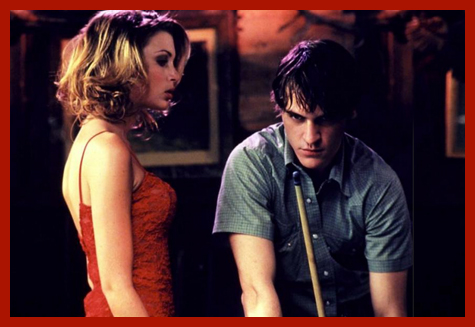
Clay, like his namesake, can be molded easily depending on who he's interacting with, coloring not only his decisions but exacerbating the multiple dilemmas he finds himself in. You'll find yourself feeling sorry for Clay one minute and wanting to slap him for the choices he makes like Cher does Nicolas Cage in Moonstruck. The script is infused with dark humor and takes a different approach to the typical beats of a crime thriller, from the sardonic dialogue to the gray morality of the characters. The serial killer in this dead-end town isn't an indestructible monster like Jason, Freddy, or Michael, nor is he a brilliant criminal mastermind like Hannibal Lecter. There are no outright heroes or villains or blanket judgments on right vs. wrong.

"Some people just need – need – killing," Vince Vaughn's Lester Long tells Clay, and even if we don't agree with that, the movie doesn't take sides and lets us see how Clay, Lester, and Garofalo's strong-willed Agent Dale Shelby react to the murder and mayhem around them. While there are striking scenes of blood and violence, director David Dobkin doesn't highlight the gore, rather the character's reactions to the bloodshed and chaos around them. The film utilizes an idiosyncratic, unconventional blend of crime, drama, humor, and pathos to tell Clay's story, highlighting themes like friendship, loyalty, small town life, and where the line is between the choices you can live with and those that will keep you awake at night. Hopefully horror fans looking for something unique and offbeat to watch will appreciate Clay's bizarre world.

The House of Yes (1997).
This independent black comedy has many of the tropes that horror fans know and love—a giant mansion, a weird and bizarre (by society's standards) family, a raging storm, an electrical outage plunging the characters into darkness, deep dark family secrets being unearthed, and taboo subjects such as incest, mental illness, classism, and murder.
The phenomenal Parker Posey plays Jackie-O, who suffers from many unspecified mental afflictions and disorders, including her obsession with the Kennedy assassination and her twin brother Marty. Marty (Josh Hamilton) is returning for Thanksgiving dinner with his new girlfriend Lesly (Tori Spelling) in tow, despite the warnings from his mother (Genevieve Bujold) that Lesly's presence could send Jackie-O into another psychopathic spiral. Why? Let's just say that Jackie-O and Marty have a relationship that Cersei and Jaime Lannister would throw a piñata party for.

Like an affluent version of the Sawyer family from The Texas Chainsaw Massacre, but with much less cannibalism, the Pascals live in a bubble from the outside world and do not take kindly to intruders. Maybe there's a crossover movie with Pascals and Sawyers waiting to happen in a shared universe.
Jackie-O is horrified that Lesly works at as a waitress and comes from poverty. Tori Spelling is outstanding as Lesly, holding her own against the formidable Posey. Lesly acts as the audience surrogate, thrust into a world of wealth, privilege, and peculiarity she has never seen before. Spelling excels in a down-to-earth role that's light-years away from the one that made her famous, the beloved Donna Martin.

It's hard enough to meet your significant other's family for the first time, and the Pascals aren't Kardashian-level rich/crazy, or even Elon Musk-level rich/crazy; theirs is on a whole different level. Lesly is the outsider penetrating the bubble of abnormality the Pascals have fostered; she is our proxy to Sally Hardesty entering the Sawyer's house. This is not a movie filled with action sequences or loud explosions. The emphasis is on characterization and the quick, witty dialogue from a smart script, as every conversation reveals another layer to each of the roles. The words spoken say several things at once, on many levels; while at the same time, it hinges on the things unspoken to drive the plot and interactions.
Lesly: I don't think you're insane.
Jackie-O: You don't?
Lesly: No.
Jackie-O: You don't think I'm an eensie-weensie bit insane?
Lesly: I don't think you're insane. I think you're spoiled.
Jackie-O: Oh please. If everyone around here is going to start telling the truth, I'm going to bed.

Jackie-O is at once the most feared and loved member of the family. Her family's money has made it so she is never held accountable for anything she does. It's a razor-sharp look at how money guarantees privilege and success even when it's not hard-earned. She disregards all others for her own feelings and manipulates those around her. Parker Posey is mesmerizing as Jackie-O, never playing her as a villain but as a pampered, damaged soul who can justify going against any societal norm for her own benefit.
The House of Yes takes on topics people don't discuss in polite society and brings them to light. While it never mocks its characters or their suffering, it uses its humor to underscore the tense atmosphere and familial conflict. It would make an amazing horror film because its themes are horrific.

The Opposite of Sex (1998).
The always-incredible Christina Ricci plays the acerbic, amoral Dedee Truitt, who moves in with her well-off half-brother in Indiana and wreaks havoc on his life. She's the human equivalent of a twister. Helen Hunt and Bill Paxton could chase Dedee down by following her trail of destruction. From murder, unwanted pregnancy, seduction, thievery, manipulation, and the lies she spins, Dedee is the villain of the ultimate Lifetime t.v.-movie come to life. However, she's also a smart and interesting lead character, never afraid to speak her mind or share her thoughts. Like Sophia from The Golden Girls, she does not care what you think or if you like her. She is who she is.
The bright script is whip-smart, insightful, and politically incorrect without devolving into maudlin sentimentality or providing trite resolutions. "If you think I'm just plucky and scrappy and all I need is love, you're in over your heads," Dedee tells the audience right away in a voiceover. "I don't have a heart of gold and I don't grow one later, okay? But relax. There's other people a lot nicer coming up – we call them ‘losers.'" The movie tackles themes like rejection, isolation, love, longing, sexuality, sex, and the family that you're born into vs. the family you make.

Those of us who grew up with their parents telling them that watching horror movies would "turn you into a serial killer" (wait, am I the only one whose folks said that?) can relate to the movie's themes of being an outsider. Each character is on the fringe of judgmental genteel society in their own way. Every person in the movie is searching for something, somewhere, that gives them the feeling of belonging or acceptance. The greatest example of this comes from Lucia (Lisa Kudrow), the frumpy, bitter best friend of Dedee's stepbrother Bill. Lucia is the complete inverse of the character Kudrow played on Friends. Her character is the most interesting in a movie filled with complex and layered roles, and she thoroughly deserved a Best Supporting Actress Oscar nomination for her performance here.
Having been relegated to the Judy Greer-best-friend-role even in her own life, Lucia is the observer and truth-teller of the movie, though no one really listens to her. "Do you know what my Mom said when she found out Tom was gay?" Lucia asks Bill (Dedee's stepbrother). "She said ‘It's such a lonely life.' She said that to the single straight girl. Isn't that funny?" Lucia represents the loneliness the characters – and people everywhere – feel; the sense of being an outcast, the knowledge that there's billions of people in the world but sometimes you can't find your peeps.
Side note: I never did turn into a serial killer. I didn't even try. Sorry Mom and Dad.
Thanks for reading, Kindertrauma! Stay safe out there.


You must be logged in to post a comment.